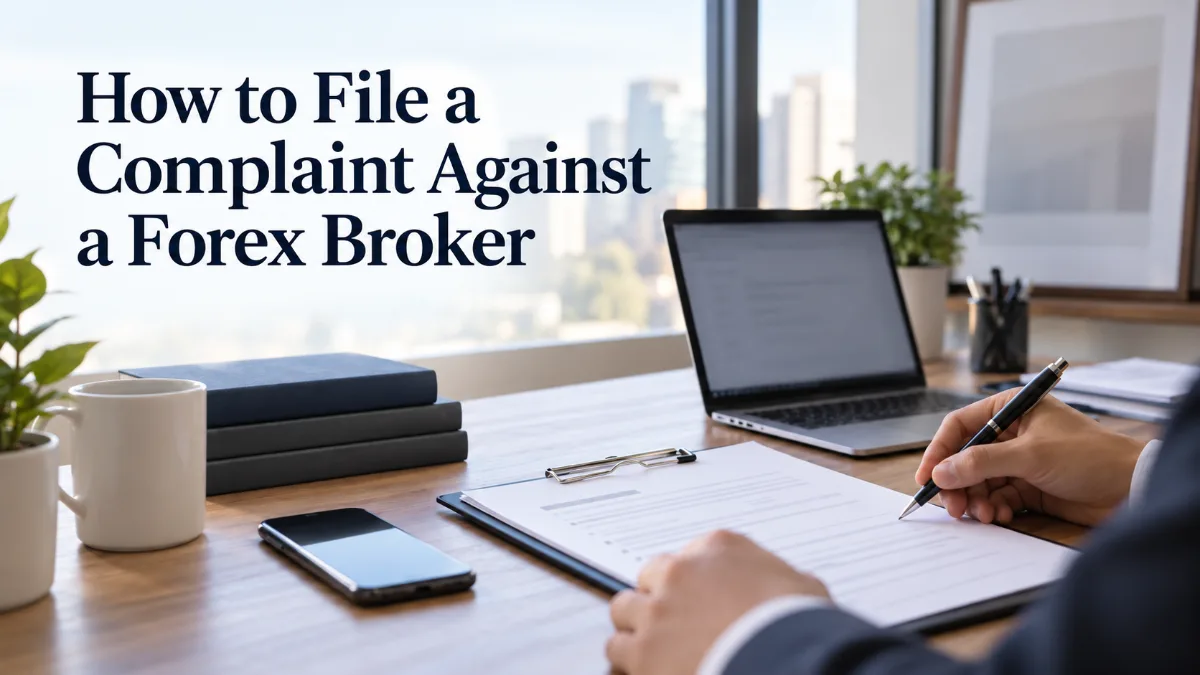
A broker complaint is strongest when it identifies the exact legal entity that held your account, states the conduct you dispute, attaches evidence and asks for a specific remedy. Do not begin with the regulator unless the rules in your jurisdiction require it. In most regulated markets, the first formal step is a written complaint to the broker. If the broker rejects it or fails to respond within the applicable period, you can then escalate it to an ombudsman, dispute resolution body or regulator where one exists.
The route matters because a complaint, a regulatory report and a compensation claim are different things. A complaint asks the broker or an external dispute resolver to put your individual case right. A regulatory report alerts a supervisor to possible misconduct. A compensation claim may apply if a regulated firm has failed and cannot meet eligible liabilities. Using the wrong route can waste time while statutory or scheme deadlines continue to run.
What counts as a broker complaint?
Losing money on a forex trade is not by itself evidence that a broker did something wrong. A useful complaint identifies a specific failure in execution, account administration, communications, advice, safeguarding or contractual performance and explains how that failure caused a loss or other harm.
Typical disputes include an unexplained withdrawal refusal, a withdrawal that remains pending without a valid reason, incorrect fees, trades placed without authority, a platform outage during a critical period, disputed stop loss execution, unexpected margin closeout, price or execution anomalies, misleading representations about account features, unsuitable advice or managed trading, and failure to follow the broker's published terms. Some issues can be legitimate consequences of market conditions, liquidity, margin rules or compliance checks, so the complaint should distinguish an adverse trading outcome from a service failure.
Before filing, preserve the evidence exactly as it existed when the problem occurred. Save account statements, order history, transaction IDs, deposit and withdrawal records, emails, chat transcripts, screenshots, platform logs and the version of any relevant terms you relied on. If a price or execution is disputed, record the instrument, order type, size, requested price, executed price and exact time shown by the platform.
File a complaint in seven steps
- Identify the legal entity. Find the company name on your account agreement, statements and regulatory disclosures. A trading brand may operate through several entities in different countries, and the entity that contracted with you usually determines the complaint route.
- Check the regulator and permissions. Confirm whether that exact entity was authorised for the service you used. Do not rely only on a logo, licence number displayed on the broker's website or a search result. Compare the regulator's official register details with the broker's domain, address and contact information.
- Define the disputed conduct. Write one clear chronology. State what happened, when it happened, which account and transactions are involved and what rule, term or representation you believe was not followed. Avoid broad accusations that are not tied to evidence.
- Calculate the remedy. Say what would resolve the complaint. This may be release of a withdrawal, reversal of an incorrect fee, correction of an account balance, reimbursement of a demonstrated loss or a written explanation supported by execution records. Separate direct loss from hypothetical profit you might have earned.
- Submit a formal written complaint. Use the broker's designated complaints email, form or postal address. Put the word "complaint" in the subject or opening sentence. Ask for a complaint reference number and keep proof of submission.
- Track the response deadline. Note the date the broker received the complaint. The applicable deadline depends on the jurisdiction and type of complaint. Keep every acknowledgement, holding response and final response.
- Escalate to the correct body. If the broker does not resolve the matter, use the external dispute route available for that legal entity. Provide the same chronology and evidence so the reviewer can see what the broker was asked to address.
What should the written complaint contain?
A concise complaint is usually easier to investigate than a long narrative containing unrelated grievances. Start with your name, account number and the broker's legal entity. Give the relevant dates and transaction references. Then explain the disputed conduct in chronological order and connect each allegation to an attachment or account record.
- Your full name and contact details
- Your trading account number and the broker's legal entity
- The date the problem began and any later events that matter
- Order IDs, withdrawal references or payment references
- A short description of what you expected to happen
- A factual description of what actually happened
- The terms, representations or instructions you say were not followed
- The amount you believe you lost or are owed and how you calculated it
- The remedy you want
- A list of supporting documents
If you allege manipulated prices, do more than attach a chart and say the price was false. Identify the instrument, timestamp, account server or platform, order type and the execution you dispute. If you have an independent market reference, explain why it is comparable. Retail forex and CFD prices can differ across liquidity sources, so a price difference alone does not prove manipulation.
What remedy should you request?
Ask for an outcome that follows from the problem you can prove. If a valid withdrawal was improperly withheld, the obvious remedy may be payment of the available balance. If an incorrect fee was charged, request reimbursement and correction of the statement. If a trade was executed contrary to the broker's applicable terms, explain the account position you believe would have existed without the disputed error and show the calculation.
Avoid making the complaint depend on an extreme headline number. Claims for profits that might have been earned after a rejected order or platform outage are harder to establish because later market movements may be hypothetical. Separate amounts that can be calculated directly from amounts that depend on assumptions. If you want interest, consequential loss or compensation for inconvenience, identify those as separate items and explain the basis for each rather than blending everything into one figure.
Also ask for records that could resolve a factual dispute. Depending on the issue, that may include execution data, the reason for a withdrawal hold, the margin calculation, relevant account notes or the version of the terms applied to the transaction. A complaint can seek both an explanation and redress.
How to file a complaint with the FCA
For a dispute with a UK authorised financial firm, the Financial Conduct Authority explains that you should normally complain to the firm first. The FCA supervises regulated firms but does not act as the adjudicator of an individual compensation dispute. If the firm does not resolve the complaint, the Financial Ombudsman Service may be the route for an eligible consumer complaint.
For most UK financial complaints, the firm generally has up to eight weeks to issue its outcome. If the complaint is resolved very quickly, different communication requirements can apply. Time limits also govern when the original complaint must be made. As a general FCA consumer rule, a complaint normally needs to be raised within six years of the event or, if later, within three years from when you became aware that you had cause to complain. Because exceptions and product specific rules exist, do not delay filing while you continue negotiating informally.
So the practical answer to "how to file a complaint with FCA" depends on what you want. If you want an individual dispute reviewed and redress awarded, start with the broker and then use the Financial Ombudsman Service if the case is eligible. If you want to alert the FCA to an unauthorised firm, suspected scam or broader misconduct, that is a regulatory report rather than a substitute for the complaint process.
How Financial Ombudsman forex complaints work
The Financial Ombudsman Service can consider eligible complaints involving spread betting and contracts for difference, which are common structures for retail leveraged forex trading in the UK. Its published examples include disputes about advice, suitability, stop orders and margin calls. Jurisdiction still depends on the firm, the complainant, the activity and the relevant time limits, so not every forex loss automatically qualifies.
You generally take the complaint to the Financial Ombudsman Service after receiving the firm's final response or after the firm has had the applicable period to consider the complaint. For most complaints that period is eight weeks. A final response should explain the broker's decision and your right to take the matter further. If you remain dissatisfied, you normally have six months from the date of the final response to refer the case to the ombudsman.
The ombudsman process is not a second trading desk review limited to whether a platform mechanically followed an order. The case handler can examine the evidence from both sides and consider what happened in the context of the business's obligations. That makes a well organised chronology especially important. Submit the final response, account statements, relevant correspondence, order records and your loss calculation. If the broker says an execution was caused by market conditions, preserve the data that shows why you disagree.
What evidence makes a complaint stronger?
The best evidence links a specific event to a specific claimed loss. For a withdrawal case, that might be the approved withdrawal request, the broker's stated processing terms, later requests for documents, proof that the documents were supplied and the current account balance. For an execution dispute, it might be the order ticket, server timestamp, fill price, platform log and the broker's execution policy.
| Complaint type | Useful evidence | Question to answer |
|---|---|---|
| Withdrawal problem | Request ID, payment history, verification records, broker messages | Why has the broker not released funds that should be available? |
| Execution dispute | Order ID, timestamps, requested and filled prices, execution policy | Was the order handled consistently with the broker's stated execution process? |
| Stop or margin dispute | Position history, margin notices, price data, account equity records | Was the closeout triggered and calculated correctly? |
| Advice or managed trading | Risk profile, recommendations, call records, messages, account activity | What was recommended or done and was it appropriate for the account? |
| Fee dispute | Fee schedule, statements, trade confirmations, account terms | Was the charge disclosed and calculated according to the agreement? |
Keep original files when possible. Screenshots are useful but can omit metadata and surrounding context. Export statements and transaction histories before the broker restricts access to the account. If conversations happened by phone or messaging apps, make a contemporaneous note of who said what and when. Do not edit screenshots in a way that removes timestamps or identifying details relevant to the dispute.
What if the broker is offshore or unauthorised?
An offshore licence changes the escalation path. You usually need to complain to the legal entity first and then follow the dispute mechanism of the regulator or jurisdiction that actually authorised that entity. A regulator in your home country may accept intelligence about unlawful solicitation, but it may not have jurisdiction to decide your private dispute with an overseas company.
If the broker is unauthorised or appears to be a clone firm, do not treat the case like an ordinary service complaint. Stop sending additional money, preserve all evidence and contact your bank or payment provider immediately if you have transferred funds. The Financial Conduct Authority accepts reports about suspected financial scams and unauthorised firms, but it states that reporting the scam to the FCA is not a process for recovering your money.
Clone firms make verification especially important. A scammer can copy the name and registration number of a genuine regulated broker while using different phone numbers, domains or payment instructions. Verify contact details through the regulator's official register rather than through a link or phone number supplied by the person you are complaining about.
What if the broker has failed?
If a UK authorised broker has become insolvent or cannot meet liabilities, the normal complaint route may no longer be enough. The Financial Services Compensation Scheme can sometimes compensate eligible claims where an authorised firm has failed, but protection depends on the regulated activity, the legal entity and the nature of the loss. It does not exist to reimburse ordinary market losses simply because a trade performed badly.
Keep the distinction clear: the Financial Ombudsman Service resolves eligible disputes against financial businesses, while the compensation scheme deals with qualifying claims connected with failed firms. If the broker is still operating, follow the complaint and ombudsman route first unless official instructions for that firm say otherwise. If insolvency begins during your complaint, check the regulator and compensation scheme notices for that legal entity.
Mistakes that weaken a broker complaint
- Complaining to the wrong company. The website brand may not be the entity named in your client agreement.
- Calling every loss fraud. Separate poor trading performance from a provable execution, disclosure, advice or account administration failure.
- Sending only screenshots. Add statements, order records, transaction references and the broker's written terms where available.
- Demanding an unexplained amount. Show how the requested redress was calculated and distinguish actual loss from speculative missed profit.
- Ignoring the final response. It may contain the deadline and route for external escalation.
- Waiting for endless internal reviews. Informal promises from an account manager do not necessarily stop complaint or ombudsman time limits.
- Paying a recovery firm too quickly. A third party cannot create regulatory rights that you do not have. Check whether you can use the official complaint route directly before paying anyone to represent you.
A practical broker complaint escalation plan
Start with the legal entity and jurisdiction, not with the broker's marketing name. Preserve the account record before access changes. Submit a formal complaint that identifies the event, evidence, financial effect and requested remedy. Keep the broker's final response and the date you received it. Then escalate to the external body that actually has jurisdiction over that entity and product.
For a UK authorised forex or CFD broker, the usual sequence is broker first and Financial Ombudsman Service second if the complaint is eligible. The FCA can receive reports about scams, unauthorised activity and regulatory concerns, but it does not replace the ombudsman as the forum for deciding an individual consumer dispute. If the firm has failed, check whether a compensation scheme claim is available. If the firm was never authorised, focus immediately on preserving evidence, alerting payment providers and reporting the suspected fraud through the appropriate official channels.
A complaint does not need aggressive language to be effective. It needs a verifiable account of what happened, a clear theory of what went wrong and records that allow an independent reviewer to test that theory. That structure gives the broker a fair opportunity to correct the problem and gives an ombudsman or other dispute body a usable file if escalation becomes necessary.